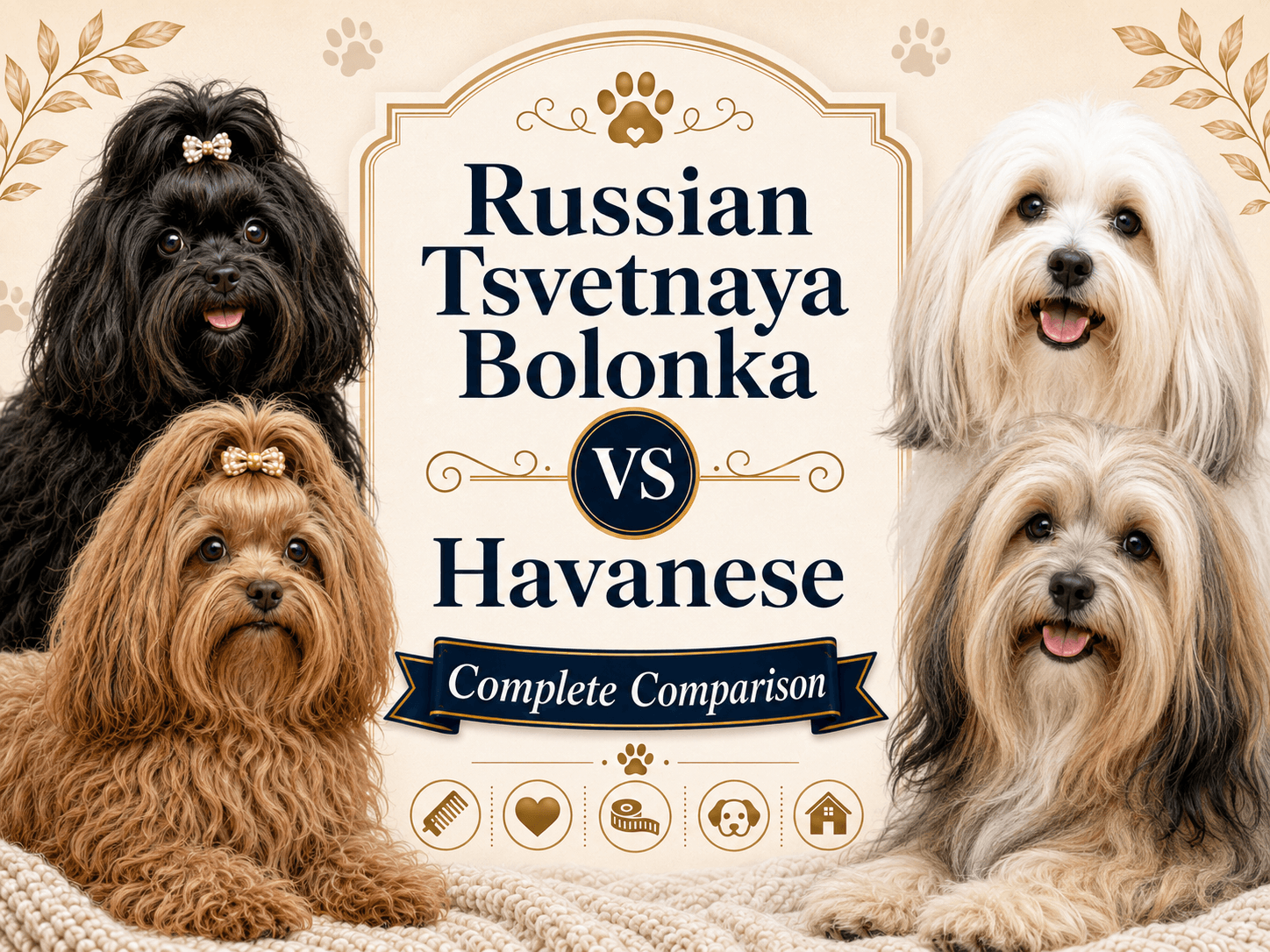
Two Bichon Cousins, Different Origins
The Russian Tsvetnaya Bolonka and the Havanese are cousins in the Bichon family of small companion dogs. Both descend from the Mediterranean Bichon-type lapdogs popular among European nobility centuries ago. Where they diverge is in geography and timing:
- Havanese — developed in Cuba from Bichon dogs brought by Spanish settlers in the 1500s. National dog of Cuba. AKC-recognized 1996.
- Russian Tsvetnaya Bolonka — developed in Moscow and Saint Petersburg in the mid-1900s, blending Bichon-type dogs with native Russian small breeds. AKC-recognized January 2026.
Side-by-Side Comparison
| Trait | Russian Tsvetnaya Bolonka | Havanese |
|---|---|---|
| Weight | 4.5–11 lbs | 7–13 lbs |
| Height | 9–10 in | 8.5–11.5 in |
| Lifespan | 14–20 years | 12–14 years |
| Coat | Soft wavy/curly double coat | Silky wavy long coat |
| Colors | Black, brown, chocolate, blue, gray, red, fawn (no solid white) | Wide variety incl. white, cream, gold, silver, black, parti-colored |
| Hypoallergenic | Yes, low-shedding | Yes, low-shedding |
| Apartment-friendly | Excellent | Excellent |
| Rarity (US) | Very rare — fewer than a dozen breeders | Common — hundreds of breeders |
| AKC year | 2026 (Toy Group) | 1996 (Toy Group) |
| Typical price | $3,000–$4,500 | $1,800–$3,500 |
Which Breed Should You Choose?
Both breeds make wonderful family companions. Choose the Havanese if you want a more readily-available breed with a wider US breeder network, a wider color palette including parti-colors, and a slightly larger size. Choose the Russian Tsvetnaya Bolonka if you want exceptional longevity (14-20 years), a rarer breed with documented Russian heritage, or specifically value the newer AKC-2026 recognition.
Frequently Asked Questions
Is a Russian Tsvetnaya Bolonka the same as a Havanese?
No. Both belong to the Bichon family (descended from the Mediterranean Bichon-type lapdogs of the Renaissance era) but they are distinct breeds. The Havanese is the national dog of Cuba; the Russian Tsvetnaya Bolonka was developed in Moscow and Saint Petersburg in the mid-20th century. The AKC recognized the Havanese in 1996 and the Russian Tsvetnaya Bolonka in January 2026.
Which is smaller, a Bolonka or a Havanese?
The Russian Tsvetnaya Bolonka is generally smaller. Bolonki weigh 4.5 to 11 pounds and stand 9-10 inches tall. Havanese weigh 7 to 13 pounds and stand 8.5-11.5 inches tall. Both are toy breeds, but Bolonki tend toward the smaller end of toy range.
Do Russian Tsvetnaya Bolonkas live longer than Havanese?
Yes, typically. Russian Tsvetnaya Bolonkas have a lifespan of 14-20 years, which is exceptionally long for any dog breed. Havanese typically live 12-14 years. The Bolonka's longevity is one of the breed's most attractive features.
Are both breeds hypoallergenic?
Yes. Both the Russian Tsvetnaya Bolonka and the Havanese have low-shedding coats and are widely considered hypoallergenic. People with mild to moderate dog allergies often tolerate both breeds well, though no dog is 100% allergen-free.
Which breed is rarer in the US?
The Russian Tsvetnaya Bolonka is significantly rarer. There are fewer than a dozen serious breeders of Russian Tsvetnaya Bolonkas in the entire US, compared to hundreds of Havanese breeders. Bolonki are considered one of the rarest members of the Bichon family in the West.
How does the price compare?
Russian Tsvetnaya Bolonka puppies typically range $3,000 to $4,500 from reputable health-tested breeders, similar to or slightly higher than Havanese puppies ($1,800 to $3,500 range). The premium reflects the Bolonka's rarity and small breeding population.
Are both breeds good for apartments?
Yes. Both are small, adaptable, and thrive in apartment living. Both are alert without being yappy, and both are content with moderate daily exercise (walks plus play). Either is an excellent city dog.