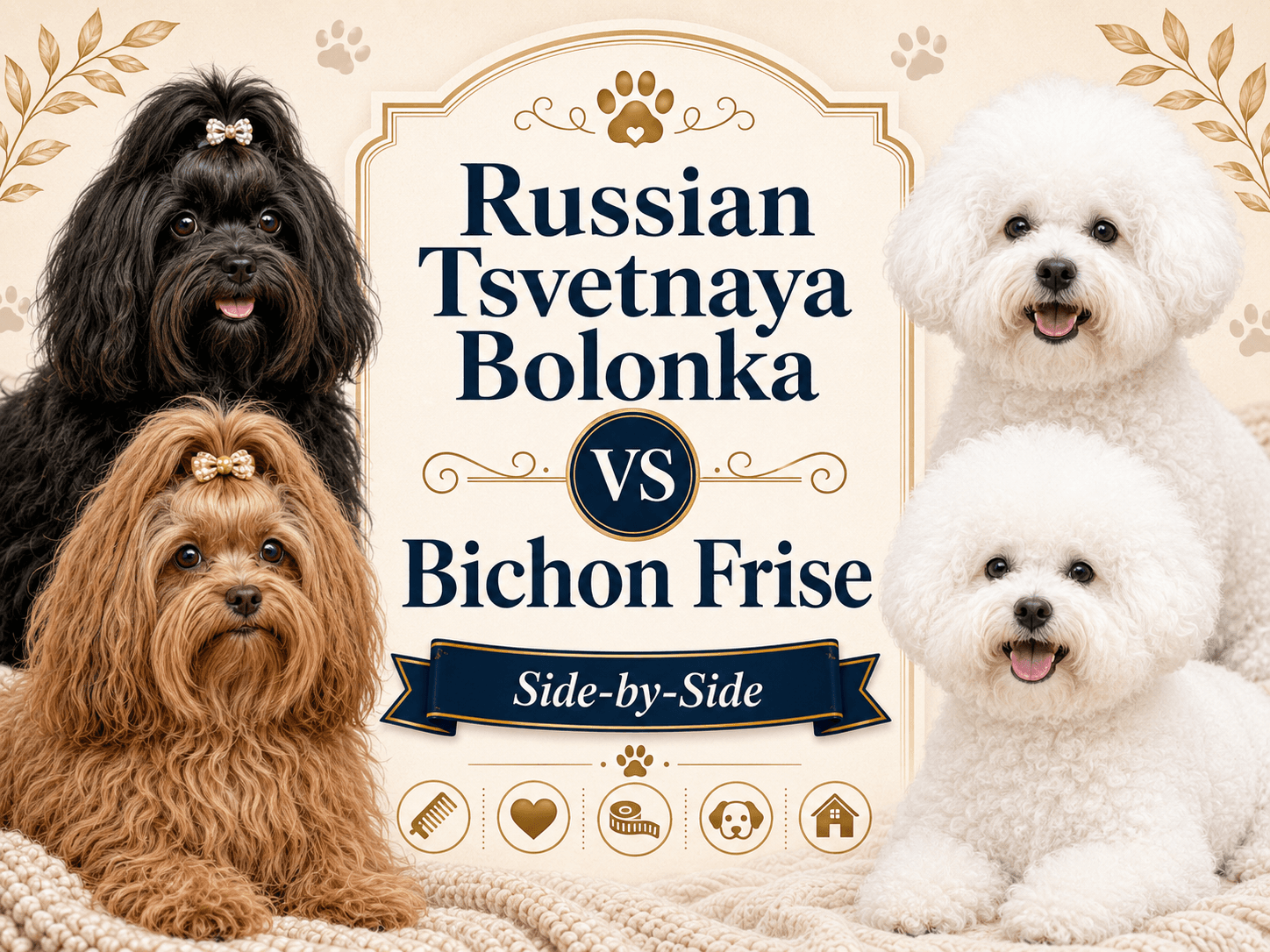
Two Bichon Cousins, Different Geographies
The Russian Tsvetnaya Bolonka and the Bichon Frise are both members of the Bichon family of small Mediterranean-rooted lapdogs. Both descend from the Bichon-type dogs that traveled with European nobility centuries ago. Where they diverge is in geography, development timeline, and coat color:
- Bichon Frise — refined in France and Belgium; the modern breed standard was established in 1933. AKC-recognized 1972. Exclusively solid white.
- Russian Tsvetnaya Bolonka — developed in Moscow and Saint Petersburg in the mid-1900s as a colored counterpart to the all-white Bichon. AKC-recognized January 2026. All colors EXCEPT solid white.
Side-by-Side Comparison
| Trait | Russian Tsvetnaya Bolonka | Bichon Frise |
|---|---|---|
| Weight | 4.5–11 lbs | 10–20 lbs |
| Height | 9–10 in | 9.5–11.5 in |
| Lifespan | 14–20 years | 14–15 years |
| Coat | Wavy/silky double coat | Tight curly white coat |
| Colors | All except solid white | Solid white only |
| Hypoallergenic | Yes | Yes |
| Apartment-friendly | Excellent | Good |
| Rarity (US) | Very rare | Common |
| AKC year | 2026 (Toy) | 1972 (Non-Sporting) |
| Typical price | $3,000–$4,500 | $1,000–$2,500 |
Coat and Color Differences
The most visible difference is color. The Bichon Frise standard permits ONLY solid white, occasionally with cream or apricot shading near the ears. The Russian Tsvetnaya Bolonka standard does the opposite — solid white is the only color that's explicitly excluded. The name "Tsvetnaya" literally means "colored" in Russian; the breed was deliberately created as a colored alternative to the all-white Bichons. Coat texture differs too: Bichon coats are notably tight, curly, and require frequent professional shaping; Bolonka coats are wavy/silky and easier to maintain at home.
Which Breed Should You Choose?
Choose the Bichon Frise if you love the classic all-white look and want a breed that's widely available with an established US breeder network. Choose the Russian Tsvetnaya Bolonka if you want a smaller toy breed with documented Russian heritage, exceptional longevity (14-20 years), the AKC-2026 recognition prestige, or simply prefer colored coats that hide tear-staining and dirt better than white.
Frequently Asked Questions
Is a Bolonka a type of Bichon Frise?
No, but they share a common ancestor. Both descend from the Mediterranean Bichon-type lapdogs of Renaissance Europe. The Bichon Frise developed in France/Belgium; the Russian Tsvetnaya Bolonka developed in Russia. The two are separate AKC-recognized breeds — Bichon Frise since 1972, Bolonka since January 2026.
Which is smaller, a Bolonka or a Bichon Frise?
The Russian Tsvetnaya Bolonka is significantly smaller. Bolonki weigh 4.5-11 pounds; Bichon Frise weigh 10-20 pounds. Bolonki sit firmly in toy-breed territory; Bichon Frise are at the larger end of small-breed sizing.
Can a Bolonka come in white like a Bichon Frise?
No. The Russian Tsvetnaya Bolonka breed standard explicitly excludes solid white. Bolonki come in black, brown, chocolate, blue, gray, red, fawn, and various combinations. The Bichon Frise, by contrast, is exclusively solid white.
Which lives longer?
The Russian Tsvetnaya Bolonka typically outlives the Bichon Frise. Bolonki commonly live 14-20 years; Bichon Frise typically 14-15 years. Both are long-lived for dogs, but the Bolonka's range extends further.
Are both hypoallergenic?
Yes. Both breeds have low-shedding coats and are widely considered hypoallergenic. Both still require regular grooming (every 6-8 weeks for professional trims, with weekly brushing at home) to maintain coat health.
Which breed has more grooming needs?
The Bichon Frise's tight curly white coat tends to require more frequent grooming and professional shaping than the Bolonka's wavy silky coat. The white color also shows tear staining and dirt that the Bolonka's darker colors do not.
Which is rarer?
The Russian Tsvetnaya Bolonka is dramatically rarer. The Bichon Frise has hundreds of US breeders and is among the more common toy breeds; serious Bolonka breeders in the US number fewer than a dozen.