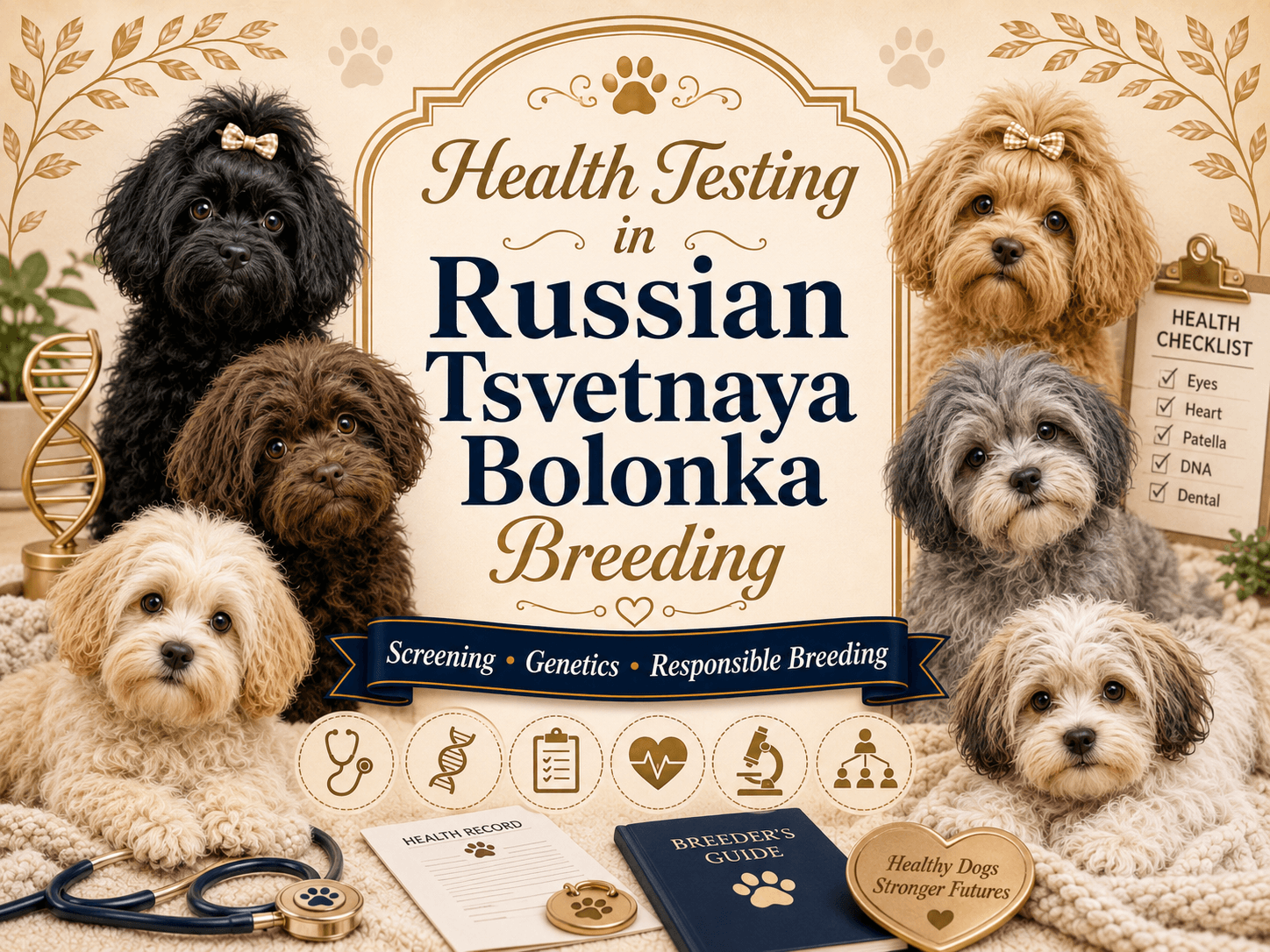
The Foundation of Responsible Breeding
Health testing is the cornerstone of responsible Russian Tsvetnaya Bolonka breeding. As potential puppy parents, understanding what tests should be performed helps you identify reputable breeders and ensures you're getting a healthy companion.
Important Note for Puppy Buyers
Always ask to see health testing certificates for both parents before purchasing a puppy. Reputable breeders will be proud to share their health testing documentation.
🧬 Why Health Testing Matters
Russian Tsvetnaya Bolonkas, like all purebred dogs, can be susceptible to certain genetic conditions. Health testing helps:
For Breeders
- Make informed breeding decisions
- Reduce risk of genetic diseases
- Improve breed health over time
- Build reputation and trust
- Follow ethical breeding practices
For Puppy Buyers
- Confidence in puppy's health
- Lower veterinary costs long-term
- Better quality of life for pet
- Peace of mind for families
- Support for responsible breeding
🔬 Essential Health Tests for Bolonkas
1. Progressive Retinal Atrophy (PRA) Testing
What it is: A genetic eye condition that can lead to blindness.
Test type: DNA test through blood sample or cheek swab
Results: Clear, Carrier, or Affected
Breeding Guidelines
- • Clear × Clear = All puppies clear
- • Clear × Carrier = 50% clear, 50% carriers
- • Never breed Affected dogs
- • Avoid Carrier × Carrier matings
2. Luxating Patella Evaluation
What it is: Kneecap dislocation, common in small breeds.
Test type: Physical examination by veterinary orthopedist
Grading: Normal, Grade I, II, III, or IV
Evaluation Standards
- • Normal: No luxation detected
- • Grade I: Occasional luxation
- • Grade II-IV: More severe forms
- • Only Normal/Grade I should breed
3. Heart Clearance
What it is: Evaluation for congenital heart defects.
Test type: Cardiac auscultation by veterinary cardiologist
Results: Normal or describes any abnormalities found
Examination Details
- • Performed after 12 months of age
- • Detects heart murmurs
- • Identifies structural abnormalities
- • Annual re-checks recommended
📋 Additional Recommended Testing
Metabolic & Genetic
- Liver Shunt Testing: Blood work to detect portosystemic shunts
- Thyroid Panel: Complete thyroid function evaluation
- Genetic Diversity: COI (Coefficient of Inbreeding) calculation
- DNA Profiling: For breeding verification
Physical Evaluations
- Hip Evaluation: Though rare in small breeds, still valuable
- Elbow Clearance: Less common but occasionally needed
- Bite Assessment: Proper dental occlusion
- Overall Conformation: Breed standard compliance
🏥 Testing Organizations & Certification
OFA (Orthopedic Foundation for Animals)
- • Most comprehensive database in North America
- • Provides permanent certification numbers
- • Maintains public database of results
- • Covers multiple health conditions
OptiGen (Now part of Wisdom Health)
- • Specialized in eye disease genetics
- • PRA testing for multiple breeds
- • DNA-based testing methods
- • Clear genetic reporting
Embark Veterinary
- • Comprehensive genetic health testing
- • Tests for 200+ genetic conditions
- • Breed-specific health panels
- • Research-grade accuracy
❓ Questions to Ask Your Breeder
Essential Questions Checklist
🚩 Red Flags to Avoid
Warning Signs
- Refuses to show health testing
- Claims "no testing needed" for small breeds
- Can't provide certification numbers
- Makes excuses about missing tests
- Only has "vet checked" with no specifics
Unacceptable Responses
- "My dogs are healthy, so no testing needed"
- "Health testing is just for money"
- "Small dogs don't have these problems"
- "Trust me, I've been breeding for years"
- "Health problems only happen to other breeders"
💰 Understanding Testing Costs
Health testing represents a significant investment for responsible breeders:
Basic Testing
- • PRA DNA Test: $65-150
- • Luxating Patella: $50-200
- • Heart Clearance: $100-300
- • Per dog total: $215-650
Comprehensive Testing
- • Full genetic panel: $200-500
- • Multiple clearances: $300-800
- • Annual re-checks: $200-400
- • Per dog total: $700-1700
Why It Matters
- • Prevents expensive health issues
- • Ensures ethical breeding
- • Improves breed health
- • Justifies responsible pricing
📈 The Future of Bolonka Health
As our understanding of canine genetics improves, health testing continues to evolve:
Emerging Technologies
- Whole genome sequencing
- More specific genetic markers
- Breed-specific health panels
- Improved testing accuracy
Breed Improvement
- Reduced incidence of genetic diseases
- Better breeding decisions
- Increased genetic diversity
- Longer, healthier lives
Supporting Responsible Breeding
By choosing a breeder who performs comprehensive health testing, you're not only ensuring your puppy's health but also supporting the improvement of the entire breed.
Your investment in a health-tested puppy contributes to healthier generations of Russian Tsvetnaya Bolonkas for years to come.